
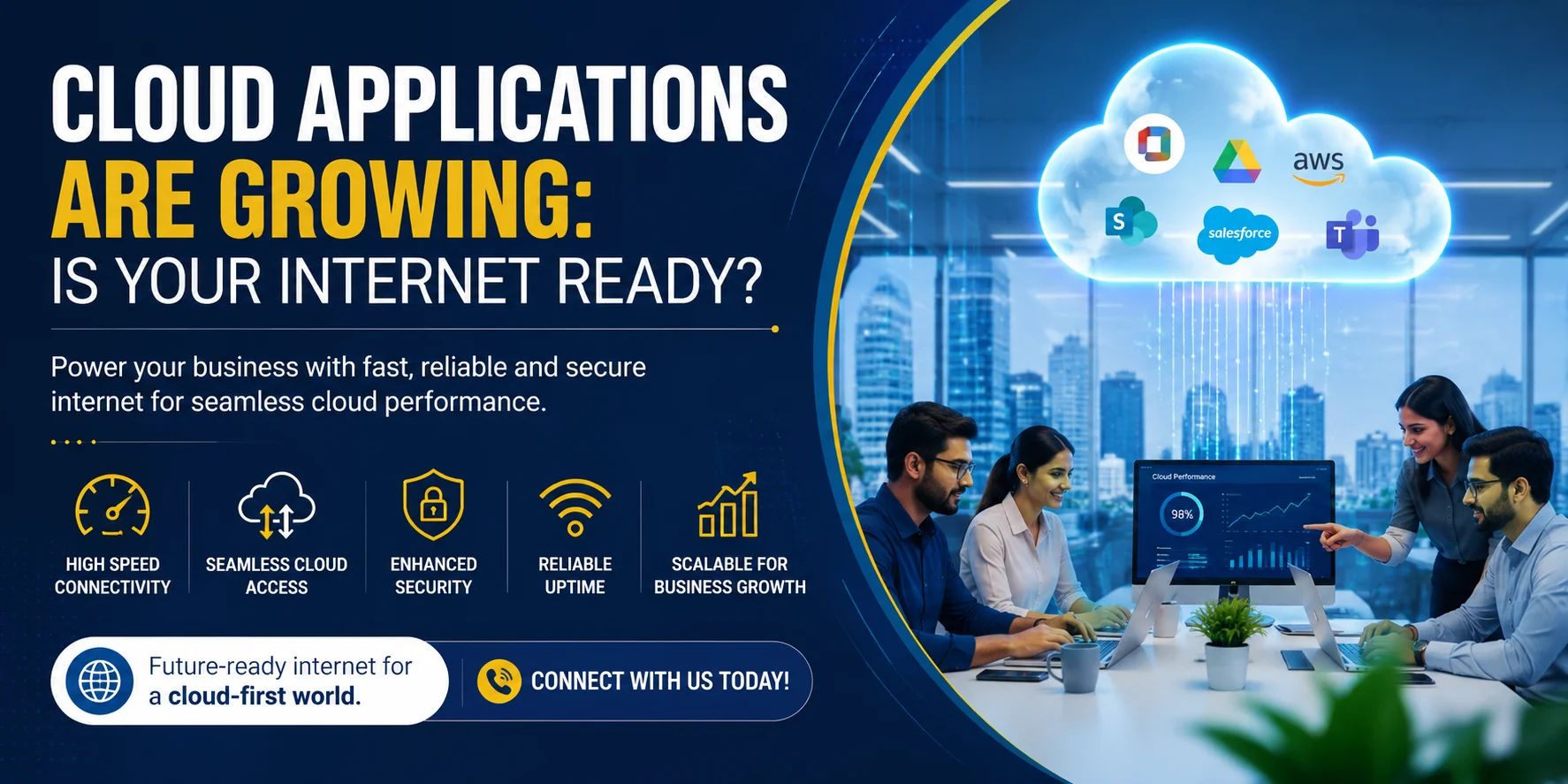
Cloud technology has transformed how businesses operate. From email and file storage to video conferencing, accounting software, CRM platforms, and AI-powered tools, organizations now depend on cloud applications for nearly every aspect of their daily operations.
As cloud adoption continues to grow, your internet connection becomes more than just a way to get online—it becomes the backbone of your business. If your network isn’t fast, reliable, and secure, cloud applications won’t perform as expected.
So, is your business internet ready for the cloud-first future?
The Rise of Cloud Applications
Businesses of every size are moving away from traditional software installations and adopting cloud-based platforms.
Popular cloud applications include:
- Microsoft 365
- Google Workspace
- Salesforce CRM
- Zoom
- Microsoft Teams
- Slack
- Dropbox
- Google Drive
- AWS
- Microsoft Azure
Instead of storing data on local computers, these platforms operate over the internet, making network performance critical.
Why Cloud Applications Need Better Internet
Unlike traditional desktop software, cloud applications continuously exchange data with remote servers.
This means your internet connection directly affects:
- Application speed
- File upload time
- File downloads
- Video quality
- Collaboration
- Customer response times
- Employee productivity
Even small delays can affect the user experience.
Common Problems Caused by Slow Internet
Businesses with outdated internet connections often experience:
Slow File Uploads
Large documents, presentations, videos, and design files take much longer to upload.
Video Conference Interruptions
Poor connectivity results in:
- Frozen video
- Audio delays
- Dropped meetings
- Poor collaboration
Cloud Software Lag
Applications may take several seconds to load or respond.
Employees spend more time waiting than working.
Slow Data Synchronization
Cloud storage platforms constantly sync files.
A slow network delays synchronization and affects team collaboration.
Reduced Productivity
If every employee loses just a few minutes each day because applications respond slowly, the overall productivity loss becomes significant over time.
What Makes an Internet Connection Cloud-Ready?
1. High-Speed Fiber Connectivity
Fiber internet provides:
- Faster downloads
- Faster uploads
- Lower latency
- Stable performance
- Better reliability
Unlike older technologies, fiber handles modern cloud workloads much more efficiently.
2. Symmetrical Speeds
Many cloud applications upload as much data as they download.
Examples include:
- Google Drive
- Microsoft OneDrive
- Dropbox
- Cloud backups
- Video conferencing
Business internet with strong upload performance ensures a smoother experience.
3. Low Latency
Latency measures how quickly data travels between your office and cloud servers.
Lower latency means:
- Faster application response
- Better video meetings
- Improved VoIP calls
- Smoother cloud access
4. Reliable Uptime
Cloud applications are only useful if your internet is always available.
Businesses should choose providers with:
- Reliable fiber infrastructure
- Network redundancy
- Proactive monitoring
- Fast technical support
5. Network Security
Cloud adoption also increases cybersecurity requirements.
Essential protections include:
- Firewall security
- DNS filtering
- Threat prevention
- Secure VPN access
- Unified Threat Management (UTM)
A secure connection protects sensitive business information while employees work online.
Industries That Depend on Cloud Connectivity
Cloud applications are now essential across many industries, including:
- IT companies
- Financial services
- Healthcare
- Education
- Manufacturing
- Retail
- Logistics
- Professional services
- Media and design agencies
Each relies on uninterrupted connectivity to keep daily operations running smoothly.
How SD-WAN Improves Cloud Performance
Businesses with multiple offices can benefit from SD-WAN.
Advantages include:
- Intelligent traffic routing
- Better cloud application performance
- Centralized network management
- Improved reliability
- Enhanced security
- Simplified branch connectivity
SD-WAN ensures cloud traffic follows the most efficient network path.
Why Cloud Connect Matters
For businesses with heavy cloud workloads, direct cloud connectivity can improve performance.
Cloud Connect helps by:
- Reducing latency
- Increasing reliability
- Providing secure private connectivity
- Delivering consistent cloud performance
- Supporting mission-critical applications
This is particularly useful for organizations using AWS, Microsoft Azure, Oracle Cloud, or Google Cloud.
Signs Your Internet Isn’t Ready
You may need an upgrade if you experience:
- Slow cloud applications
- Video call interruptions
- Frequent buffering
- Long upload times
- Cloud storage sync delays
- Employees complaining about slow systems
- Regular internet downtime
These issues indicate that your network may no longer support modern business demands.
Why Businesses Choose Jeebr Internet
Jeebr Internet offers business connectivity solutions built for cloud-first organizations.
Services include:
- High-speed Fiber Broadband
- Internet Leased Line
- Managed Internet Services
- SD-WAN Solutions
- Jeebr Cloud Connect
- Unified Threat Management (UTM)
- Business Wi-Fi Solutions
- Dedicated business support
These services help businesses achieve secure, reliable, and scalable connectivity for today’s cloud-driven operations.
Preparing for the Future
Cloud adoption will continue to grow as businesses embrace AI, automation, remote work, and digital transformation.
A reliable internet connection is no longer just an operational requirement—it’s a competitive advantage. Organizations that invest in modern connectivity today will be better positioned to support future technologies and business growth.
Conclusion
Cloud applications have become the foundation of modern business, but they can only perform as well as the network supporting them. Fast speeds, low latency, reliable uptime, and strong security are essential for maximizing productivity and ensuring seamless collaboration.
If your business relies on cloud platforms, now is the time to evaluate whether your internet connection is ready. Upgrading to a business-grade connectivity solution can improve performance, reduce downtime, and provide the reliability needed to support future growth.