
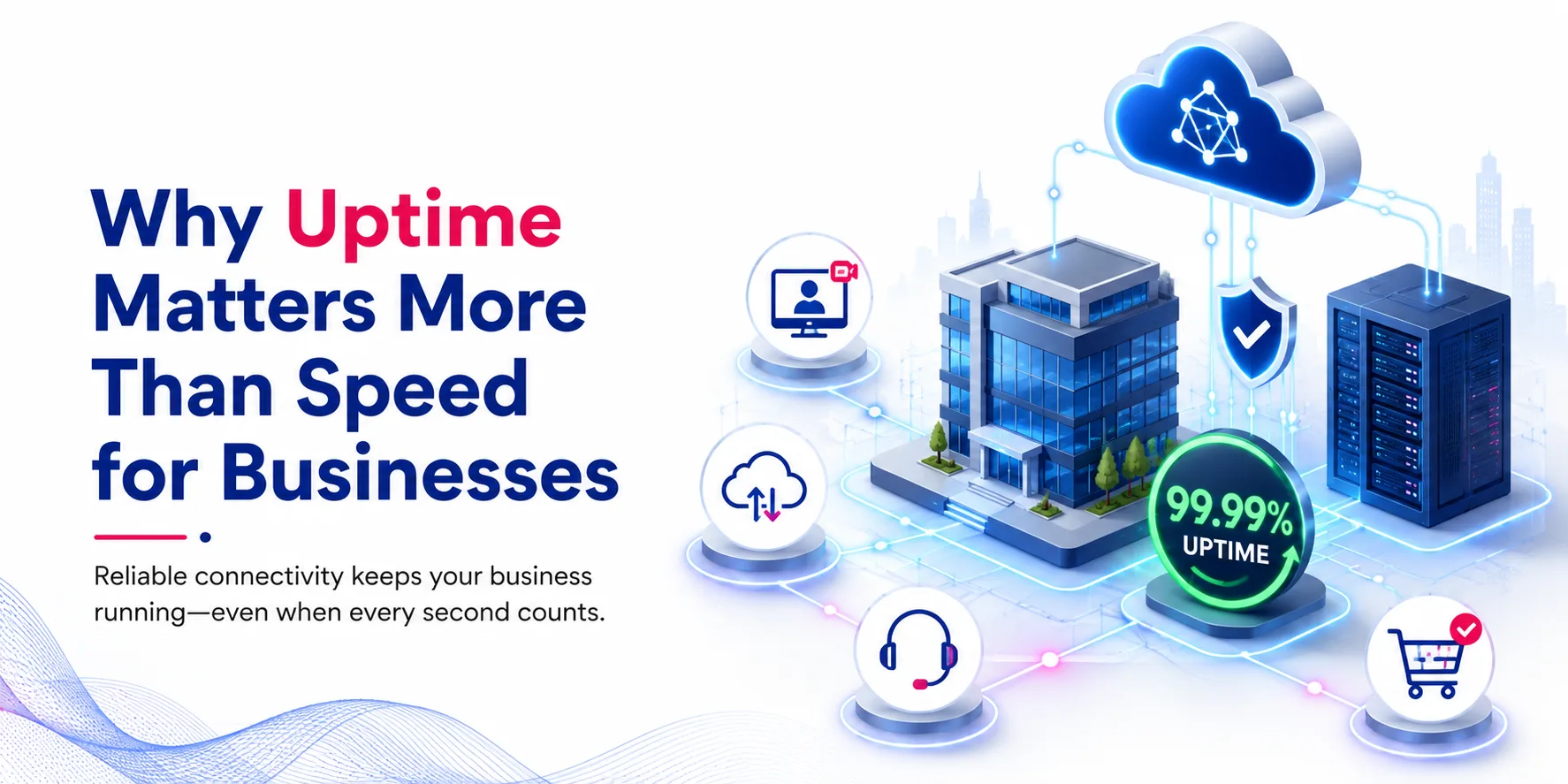
When businesses evaluate an internet connection, the first question is usually:
“How fast is it?”
While internet speed is important, it’s often not the most critical factor for business operations.
A business with a 1 Gbps connection that frequently disconnects will experience far more disruption than one with a 200 Mbps connection that remains consistently available.
For modern businesses, uptime is what truly determines productivity, customer experience, and business continuity.
What Is Internet Uptime?
Uptime refers to the percentage of time your internet connection remains operational without interruption.
For example:
- 99% uptime = Around 3.6 days of downtime per year
- 99.5% uptime = Around 1.8 days of downtime annually
- 99.9% uptime = Around 8.7 hours of downtime annually
- 99.99% uptime = Less than 1 hour of downtime per year
Even a small difference in uptime percentage can significantly impact business operations.
Why Downtime Costs More Than Slow Speed
Every minute your internet goes down, business activities stop.
This can affect:
- Cloud applications
- Video meetings
- ERP and CRM platforms
- Payment processing
- Customer support
- Email communication
- Branch connectivity
- Security monitoring
For many organizations, even a 15-minute outage can delay projects, reduce employee productivity, and negatively impact customer satisfaction.
Productivity Depends on Availability
Today’s businesses rely heavily on cloud-based applications such as:
- Microsoft 365
- Google Workspace
- Microsoft Teams
- Zoom
- Salesforce
- SAP
- ERP software
- Accounting applications
These platforms require stable connectivity more than extreme bandwidth.
A reliable connection ensures employees can work efficiently without interruptions.
Customer Experience Never Stops
Customers expect businesses to remain available throughout the day.
If your internet fails, you may experience:
- Missed customer calls
- Failed online transactions
- Slow support responses
- Interrupted video consultations
- Website management delays
Reliable connectivity helps maintain trust and keeps customer interactions running smoothly.
Business Continuity Requires Reliable Connectivity
Many organizations now operate from multiple locations.
Branches constantly exchange data between:
- Head Office
- Branch Offices
- Cloud Platforms
- Remote Employees
- Data Centres
If connectivity becomes unstable, the entire workflow is affected.
Consistent uptime ensures seamless communication across every location.
Speed Cannot Replace Reliability
Consider these two internet connections:
| Connection | Performance |
|---|---|
| 1 Gbps with frequent outages | High speed but unreliable |
| 300 Mbps with excellent uptime | Stable, consistent business performance |
Most businesses benefit far more from the second option because uninterrupted operations are worth more than peak download speeds.
What Causes Business Downtime?
Common reasons include:
- Single internet connection failures
- Network hardware issues
- ISP outages
- Poor network design
- Power failures
- Fibre cuts
- Security incidents
- Lack of network monitoring
Many of these risks can be reduced through proactive network management.
How Businesses Improve Uptime
Reliable organizations invest in:
Redundant Internet Connections
Backup connectivity ensures operations continue if one connection fails.
SD-WAN
Automatically routes traffic through the best available network path.
Enterprise Wi-Fi
Optimized wireless coverage reduces internal connectivity issues.
Managed Network Services
Continuous monitoring helps identify and resolve issues before they affect users.
Network Security
Firewalls, UTM solutions, and proactive monitoring protect business operations from cyber threats.
Why Uptime Matters for Multi-Location Businesses
Organizations with multiple branches depend on reliable connectivity for:
- Shared applications
- VoIP communication
- Video conferencing
- Centralized file access
- Cloud backups
- Real-time collaboration
Even brief outages can disrupt operations across every location simultaneously.
High uptime keeps teams connected and productive.
Choosing the Right Business Internet Provider
When selecting an ISP, don’t focus only on Mbps.
Also consider:
- Guaranteed uptime
- Service Level Agreements (SLAs)
- Network redundancy
- 24×7 technical support
- Local engineering teams
- Network monitoring
- Fast fault resolution
- Scalable business solutions
These factors often have a greater impact on daily business performance than raw internet speed.
Why Businesses Choose Jeebr Internet
At Jeebr Internet, we design connectivity solutions that prioritize reliability, business continuity, and performance.
Our business internet services include:
- Internet Leased Lines
- Corporate Broadband
- SD-WAN Solutions
- Managed Network Services
- Cloud Connectivity
- Unified Threat Management (UTM)
- Network Monitoring & Support
Whether your business operates from a single office or multiple branches, we help ensure your network remains available when you need it most.
Conclusion
Speed helps businesses work faster.
Uptime helps businesses keep working.
A reliable internet connection minimizes downtime, supports cloud applications, improves collaboration, and ensures uninterrupted customer service.
When evaluating your next business internet solution, remember:
The fastest connection isn’t always the best one—the most reliable connection usually is.